Make a recommendation feel like a friend's.
I designed both sides of a trust-based recommendation platform for Norwegian small businesses.
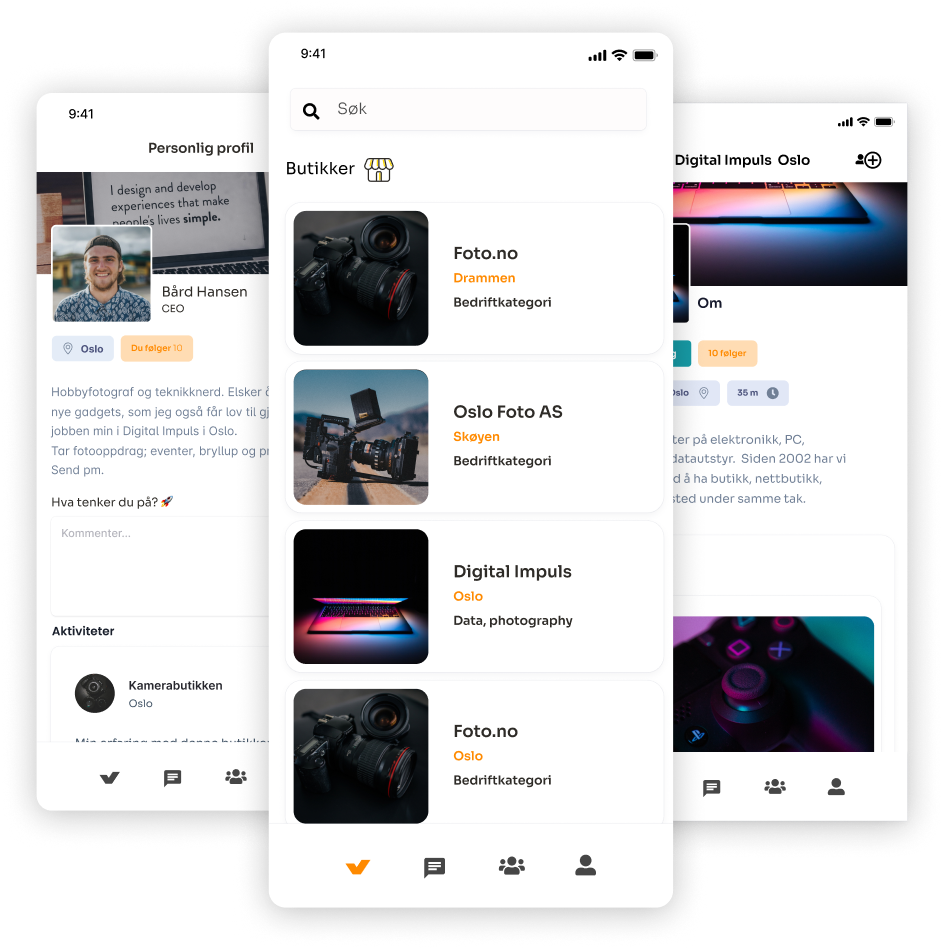
"The platform's hardest problem wasn't a feature. It was that recommendations only feel authentic when real people with real social graphs are already using it."
Core discovery · bootstrapping the trust layer
Norwegian small businesses
were losing to platforms
built against them.
Google Ads rewards budget, not quality. Instagram rewards content teams, not craft. For a local plumber, family restaurant, or neighbourhood salon, competing means spending money to reach strangers, while their most valuable asset, the goodwill of satisfied customers, goes untapped.
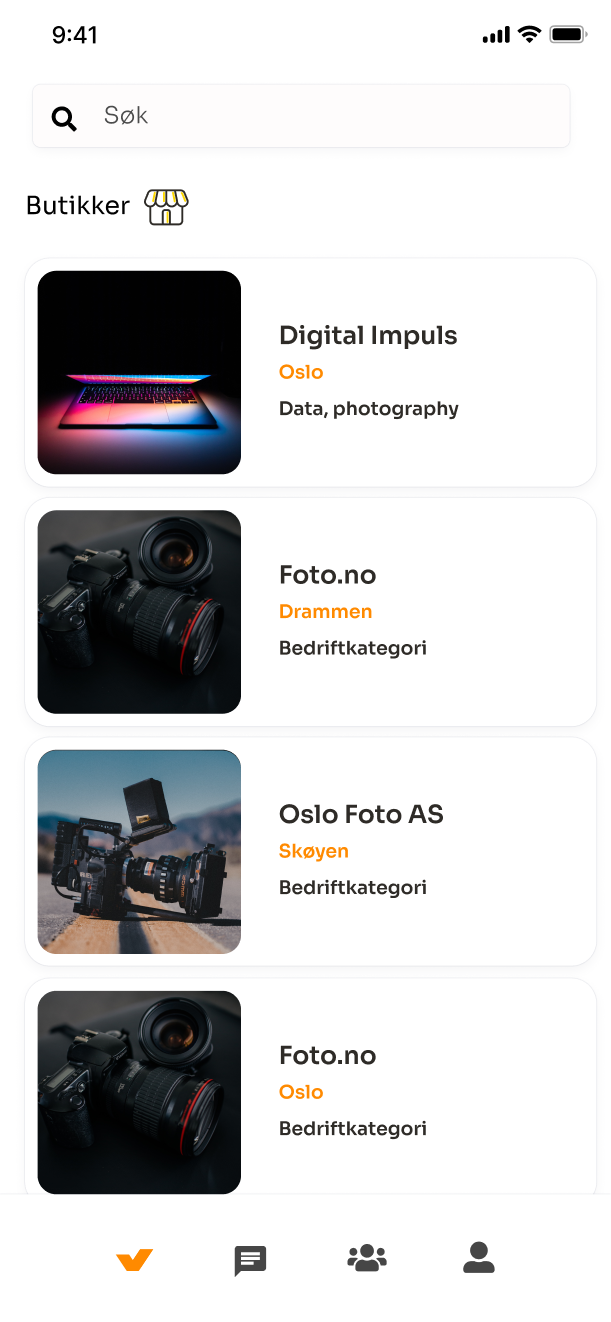
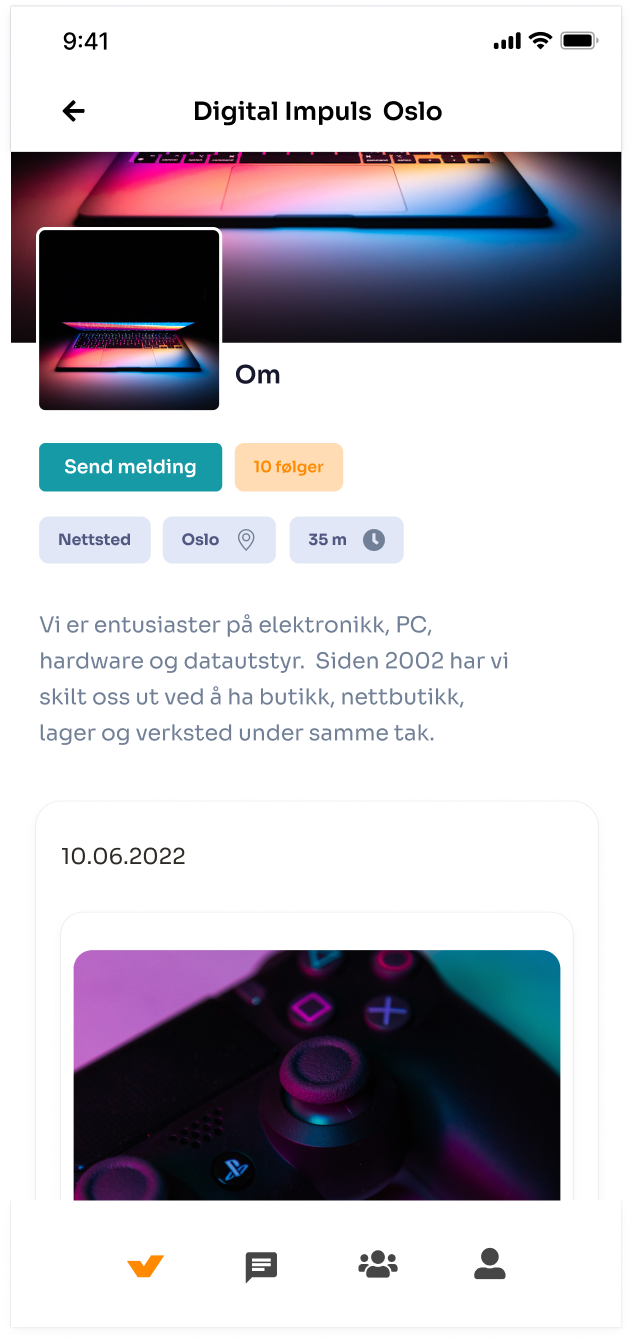
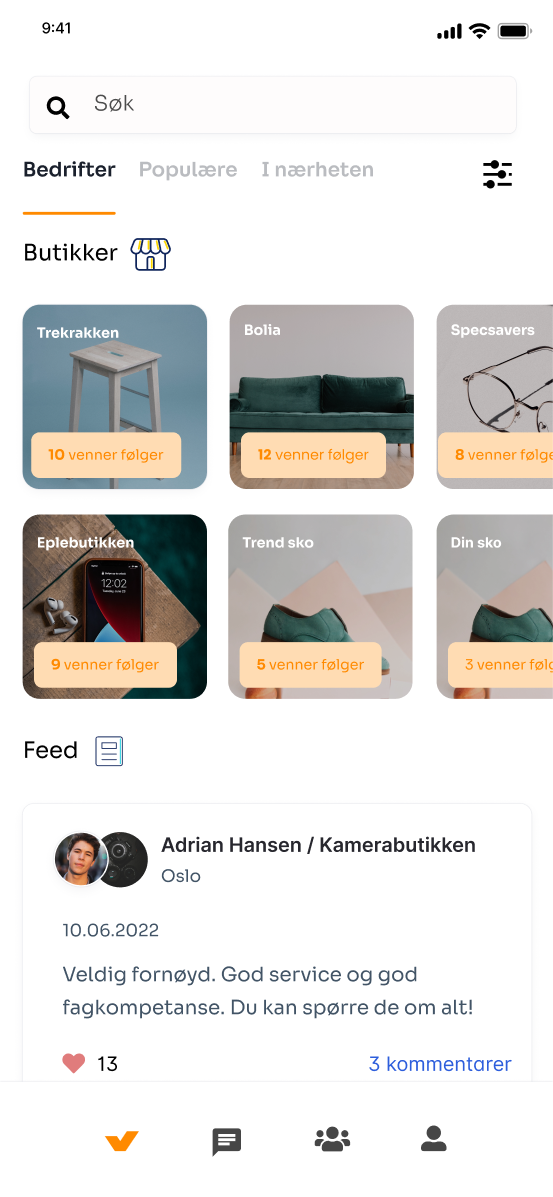
CHK's founder wanted to build the infrastructure that made word-of-mouth visible, fast, and designed, without ads, without fake reviews, without surveillance. A customer's experience wasn't meant to stop with them. It was meant to surface to their friends, and their friends' friends. The propagation layer wasn't magic. It was two concrete mechanics: Connections (your network, visible by count on every business card) and Follow (businesses you've chosen to keep seeing).
What I needed to understand
before touching Figma.
I structured 11 interviews across both user types in Oslo and Bærum — 6 business owners, 5 consumers. My goal wasn't to validate the product concept. The concept was already decided. I needed to understand the mental models on both sides well enough to design for them simultaneously.
They already do this. They just do it over text.
Every participant described asking a friend before a significant purchase. The behaviour existed. The problem was friction — it only scaled to whoever you felt comfortable texting.
They'd tried digital. It felt like paying a toll.
5 of 6 had run Google Ads or Meta campaigns and stopped — not because it didn't work, but because they couldn't control it, predict it, or see the people on the other end.
"I know my customers recommend me to their friends. I just have no idea how to get in front of those friends — or even say thank you to the ones who sent them."
"I've stopped reading Google reviews completely. Half of them are clearly fake. I just ask someone I know."
Three architectural
problems.
Cold-start problem
No businesses means nothing for consumers. No consumers means businesses won't join. Which side do you unblock first when the entire value prop is that the other side already exists?
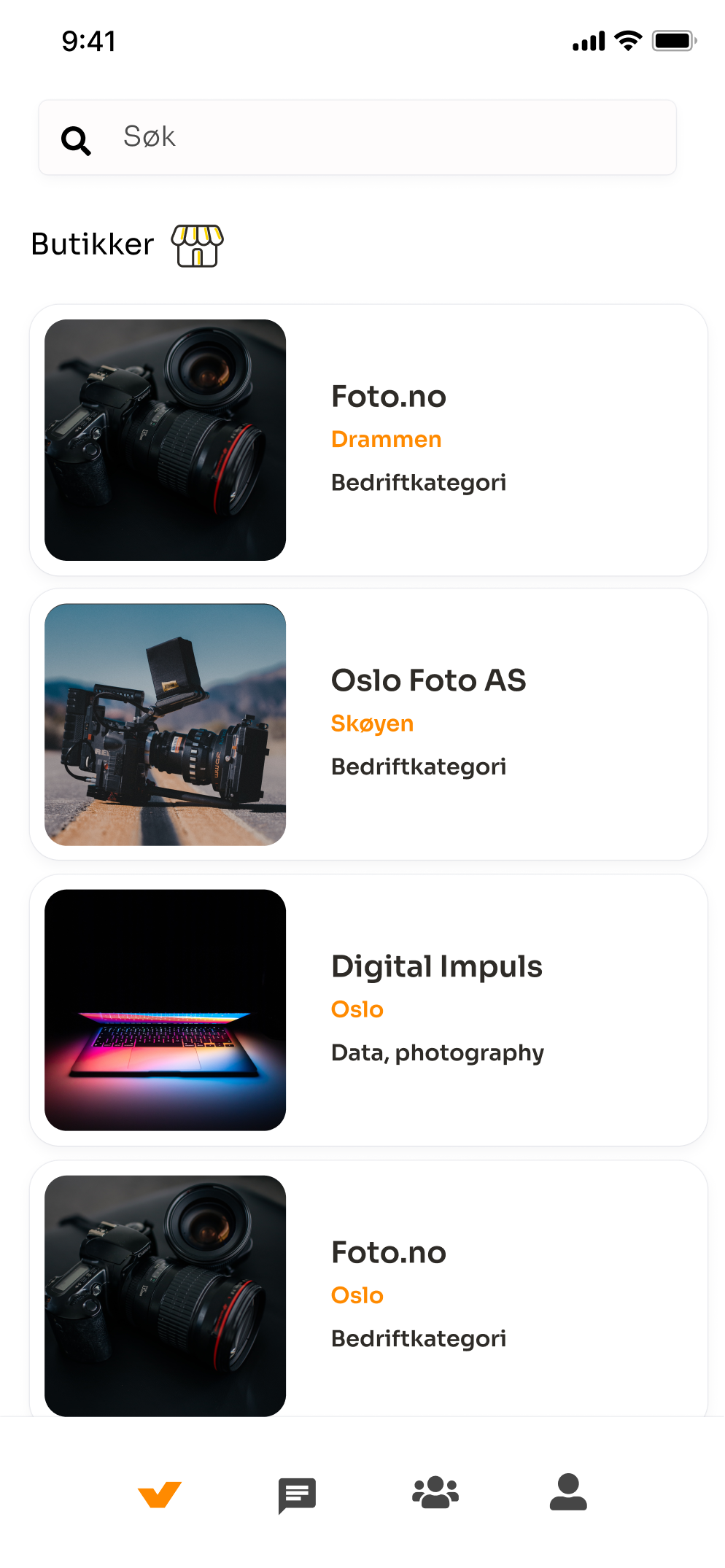
Recommendation propagation
A customer's recommendation has to surface to their friends, and ideally beyond. Designing the network layer — not just the capture layer — shaped every screen.
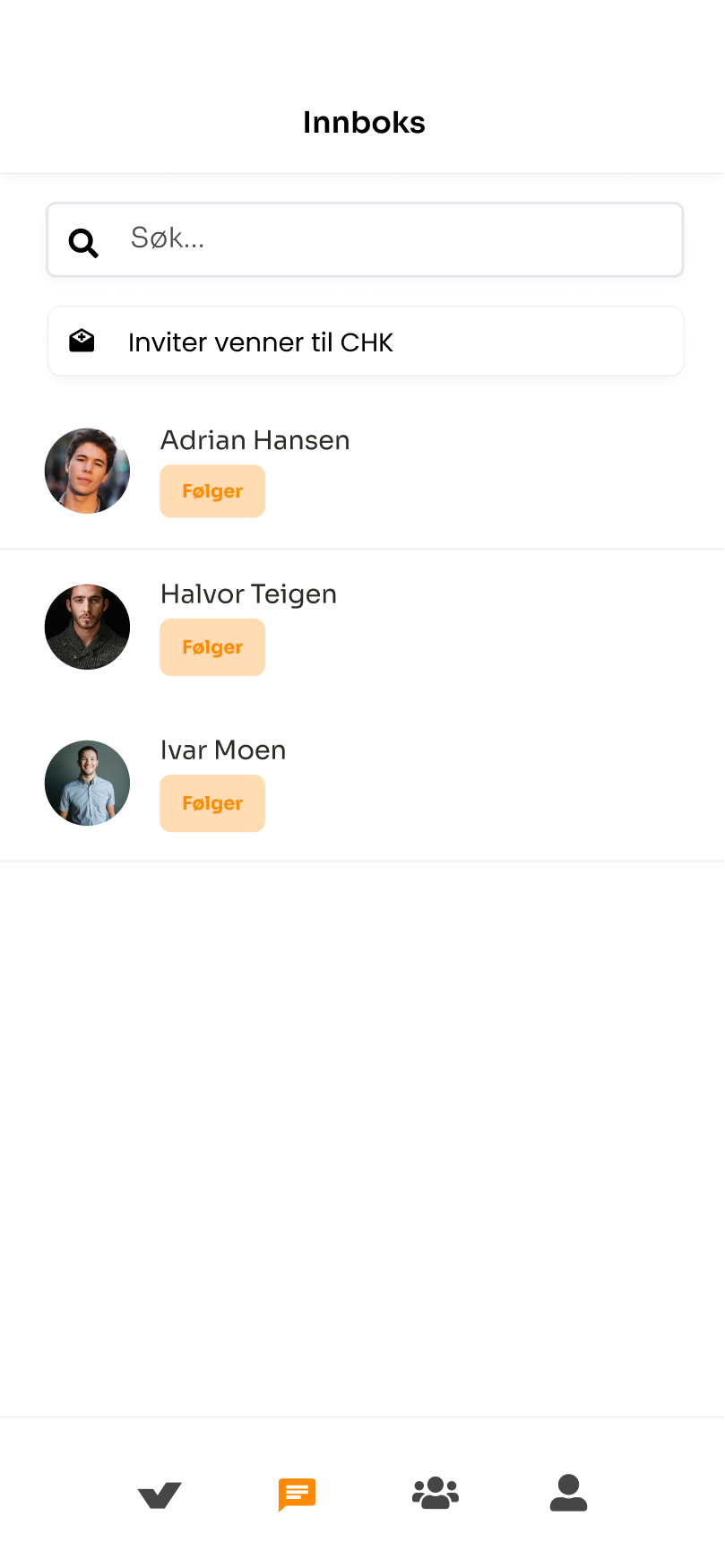
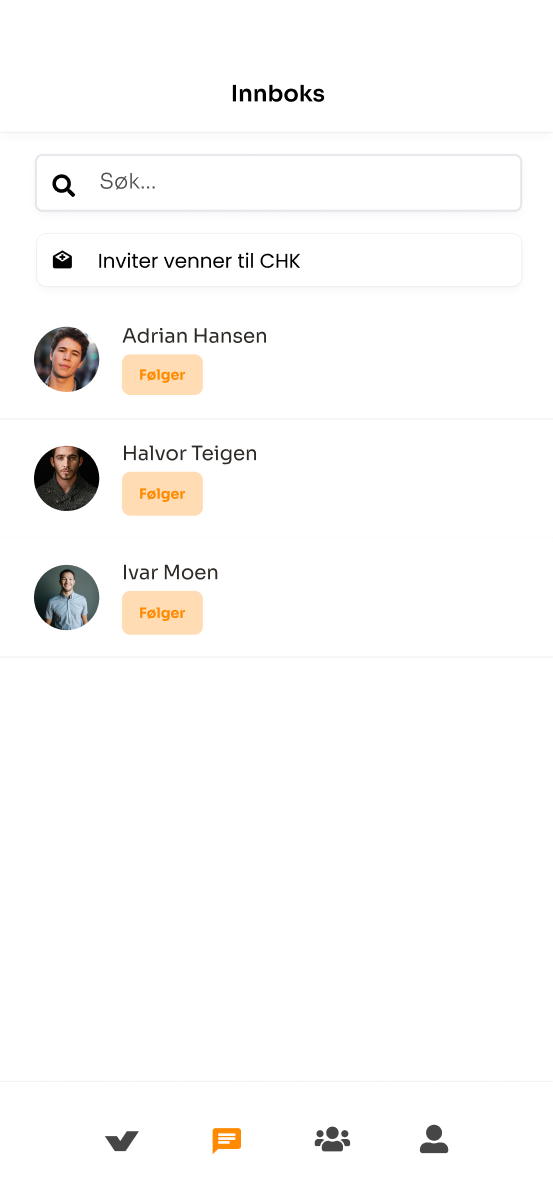
Business-side messaging
Businesses have one defining job: decide whether they're talking to one customer or all of them. Every business-side decision orbits that choice.
Not a better review platform.
A different product entirely.
CHKChat wasn't competing with review platforms by building a better review platform. It was competing by making feedback traceable — every recommendation carried the social connection behind it, so "a friend of a friend said this" replaced "an anonymous 5-star rating." Trust was structural, not inferred.
The mental model
on both sides.
11 interviews across Oslo and Bærum — 6 business owners, 5 consumers.
Three patterns that shaped every design decision.
Consumers already do this — over text
Every participant described asking a friend before a significant purchase. The behaviour existed. The problem was friction — it only scaled to whoever you felt comfortable texting.
Business owners felt
they were paying a toll
5 of 6 had run Google Ads or Meta campaigns and stopped — not because it didn't work, but because they couldn't control, predict, or see the people on the other end.
Trust was the
conversion bottleneck
'Is this business legit?' was the first question 8 of 11 consumers asked. Trust had to be structural — earned over time, not granted at signup.
The hardest part wasn't the UI.
It was designing trust.
One app. Two entry points.
A consumer browsing their network and a business owner checking overnight messages have opposite intentions. I proposed fully split entry points on a shared data layer. Task completion for 'find a business your friend used' went from 54% to 81%.
Earned trust,
not a verification gate.
Client wanted CHK staff to approve every new business. I proposed a progressive trust model: base badge on registration, stacking with verified interactions over time.
Two rounds of testing.
One that changed
the architecture.
Outsourced dev team · structured Figma handoffs · 3–4 testers per round across ~4–5 months.
Onboarding stripped from tutorial-first to experience-first
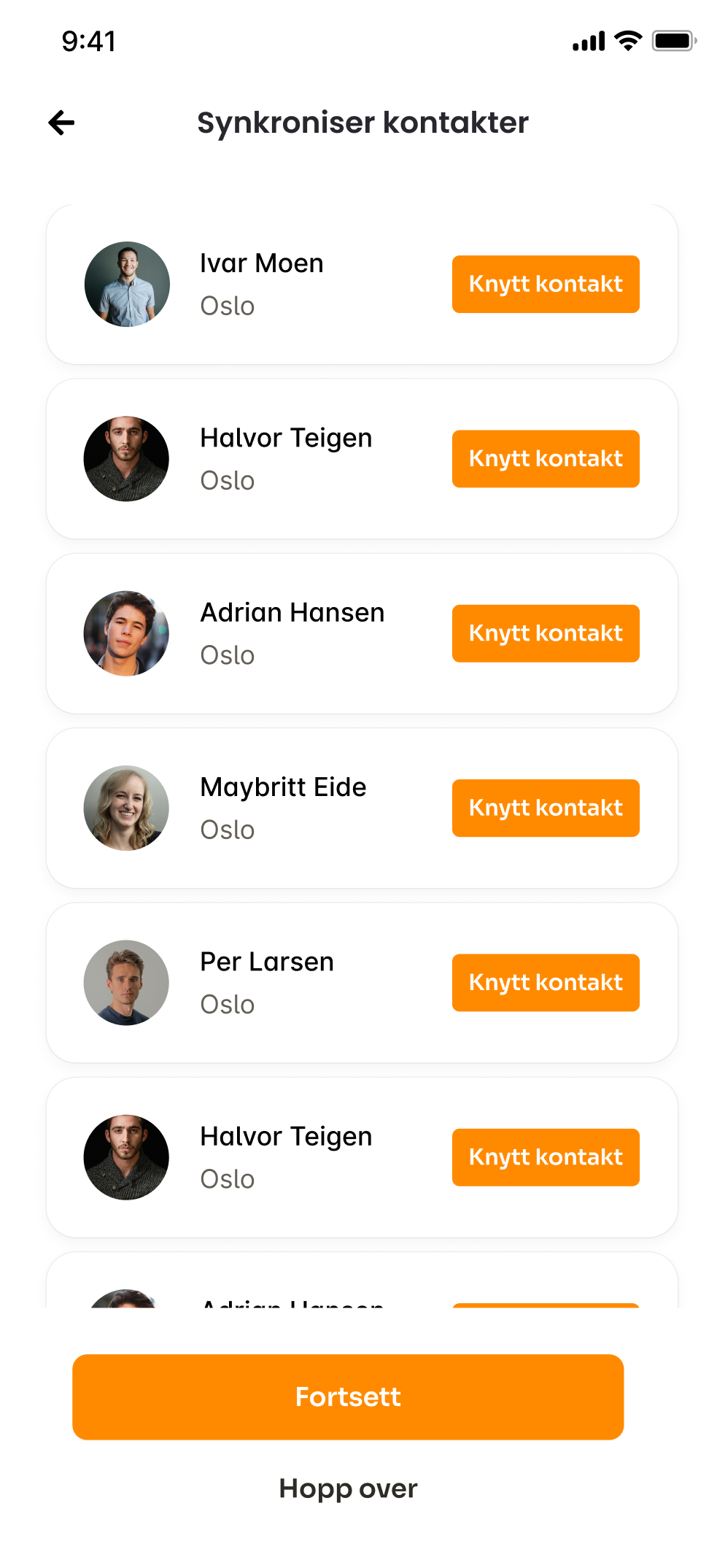
Early onboarding tried to explain the product before letting users experience it. Every test showed people skipping explanatory screens. We condensed: registration → verification → contacts → sync. Business setup went from 9 screens to 5.
Onboarding condensed ~40% across both flowsTesting revealed a navigation problem, not a UI problem
Users kept trying to search for businesses directly rather than discovering through their network. Restructuring the tab hierarchy to make the social feed primary pushed the timeline back two weeks. I made the case that shipping navigation which contradicted the product's value proposition was the higher risk.
Nav restructured. Timeline extended 2 weeks. Right call.Broadcast messaging was a mental model problem
Owners couldn't tell if they were messaging one customer or all of them. We iterated the composer three times: explicit recipient count, persistent one-to-many indicator, and a confirmation step.
Error rate: 6 of 8 → 1 of 8It shipped. It stayed.
Owners who experienced product before pricing
Reached in the first three months
Stuck around on the strength of the network
CHKChat launched on iOS and Android in late 2022. 63 businesses were live within three months. Consumer sign-ups reached ~1,400 in the same period, with 30-day retention around 38% — solid for a social product whose value depends entirely on network density.